(0)
Roman Blinds vs Soft Roman Blinds: What’s the Difference & Which Fabrics Work Best?
Roman blinds are a timeless window treatment, offering a tailored alternative to curtains while still bringing warmth and texture to a room. At Tinsmiths, we offer both Roman Blinds and Soft Roman Blinds — two styles that look similar at first glance but behave quite differently in use, appearance and fabric suitability. Understanding the difference between the two will help you choose the right blind for your space – and more importantly select a fabric which will give you a perfect finish which ever blind style you choose.
Roman Blinds: Smart, Structured & Tailored
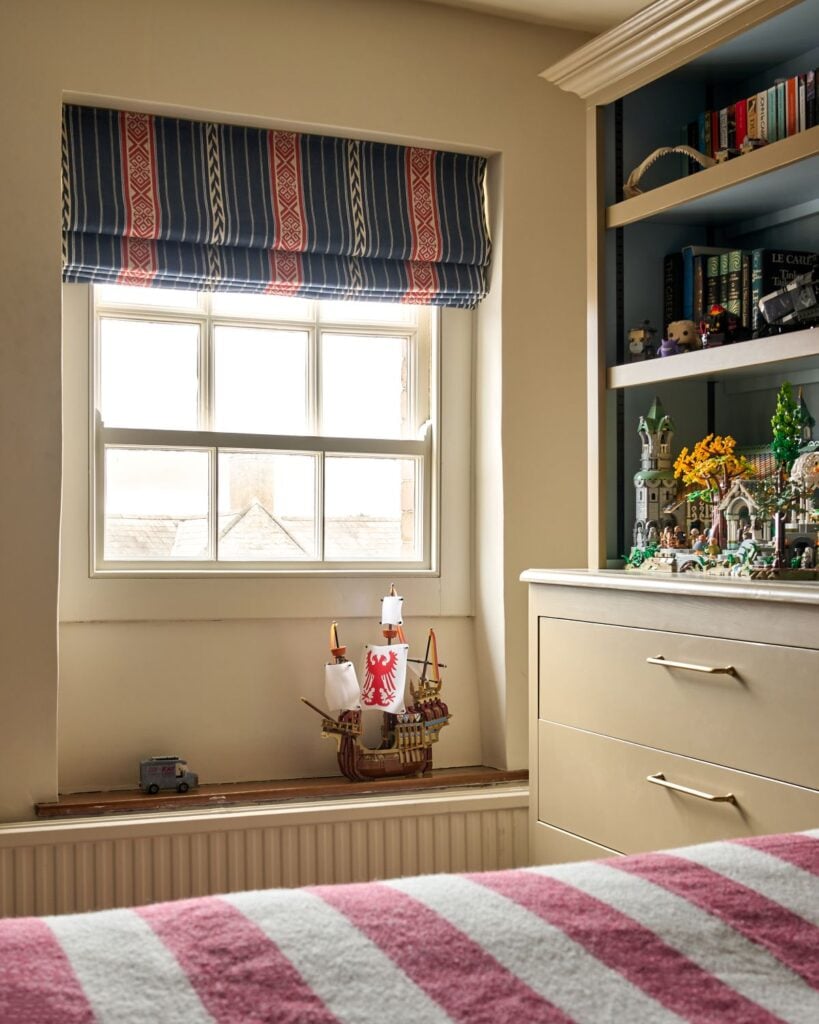
Roman blinds raise in neat, horizontal folds, creating a clean, tailored appearance at the window. This structure makes them a versatile choice for both contemporary and traditional interiors, particularly where a more formal finish is desired.
All Tinsmiths Roman Blinds are made with:
- The face fabric
- A 100% cotton lining
- A blackout thermal interlining as standard
- Horizontal rods inserted into the lining to ensure crisp folds when raised
This three-layer construction provides excellent thermal insulation, helping to keep rooms warmer in winter and cooler in summer – studies have shown correctly fitting thermal blinds to be one of the most effective ways of preventing heat loss. Horizontal rods stitched into pockets within the lining ensure the blind folds evenly and precisely when raised, maintaining its crisp appearance over time.
Best fabrics for Roman Blinds
Roman blinds work well with a wide range of fabrics, and because we include a blackout lining as an interlining we can make ‘floppier’ fabrics work well for Roman Blinds. However it is undoubtedly true that to get a smart crisp Roman Blind you should select fabrics which are slightly stiffer, look for fabrics which are not described as ‘washed’ or ‘soft drape’
- Medium weight linen and linen union fabrics
- Patterned designs printed on linen or cotton and not ‘softened’ – think about pattern scale in relation to your window.
- Ticking fabrics which are mid weight and with a firm structure
- For wide windows Extra Wide Fabrics will ensure that your blinds do not have a join. Look for light or medium weight Extra Wide Fabrics
Soft Roman Blinds: Relaxed, Elegant & Informal
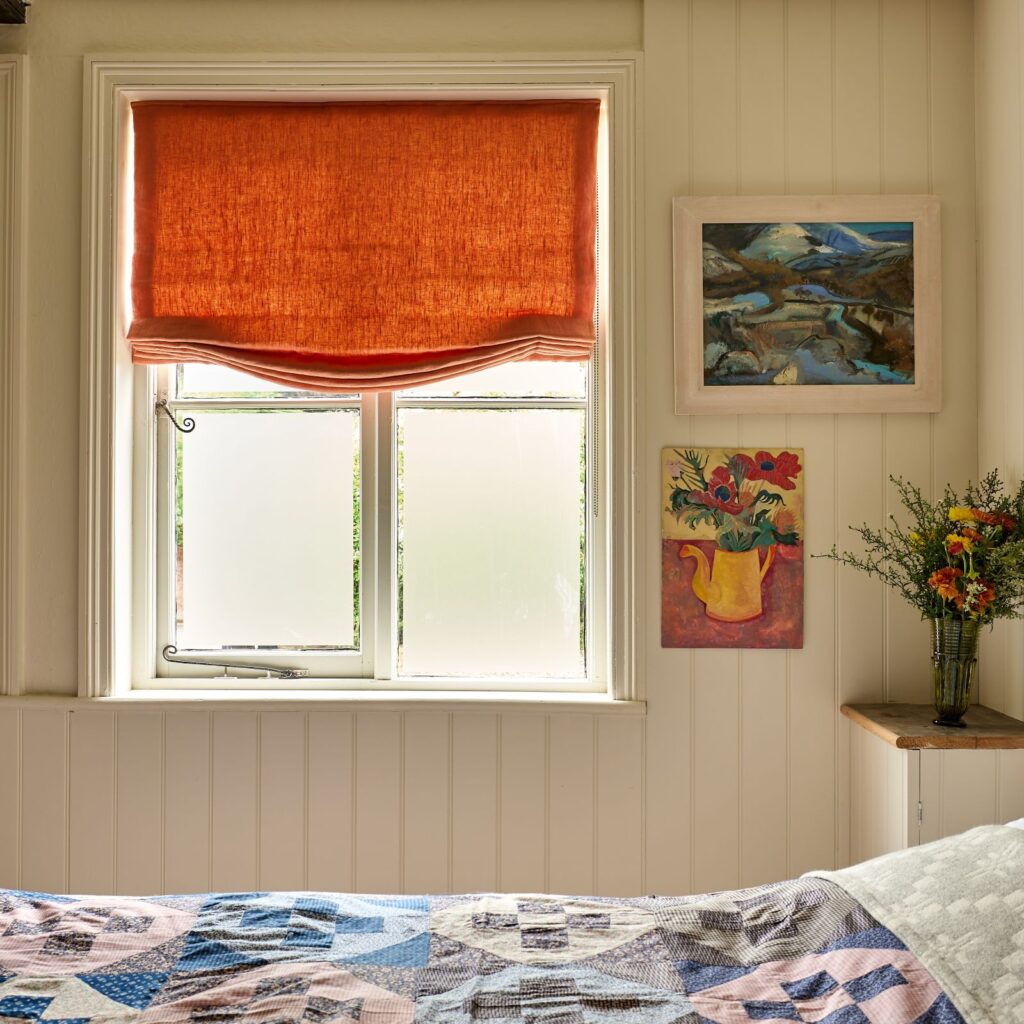
Soft Roman blinds offer a more relaxed interpretation of the Roman blind. While they raise in horizontal folds, they do not contain horizontal rods and have ‘raising rings’ positioned only at each side, allowing the fabric to fall into soft folds with a gentle centre swag. This gives Soft Roman blinds a looser, more informal character — perfect for spaces where you want softness and movement rather than crisp tailoring.
Soft Roman blinds are:
- The face fabric
- Lined with 100% cotton lining.
- Interlined with soft 100% cotton interlining – this enhances the drape of the face fabric and increases the thermal qualities of the blind.
- Finished with just two ring lines on the reverse, encouraging the subtle dip at the centre when raised
Because of this construction, Soft Roman blinds are not suitable for wide windows. With ring lines only on either side of the blind (not in the centre like Roman Blinds) the ‘swag’ created in the middle of the blind can get very deep on wide windows. This deep swag is not elegant and blocks light, it does not create the pretty elegant look that is desired.
Not all fabrics are suitable for this style, with the inclusion of interlining in our Soft Roman Blinds we can assist a fabric that is not quite as yielding as required but really you want a fabric which is quite ‘floppy’. The key requirement is softness and drape.
- Fabrics must be supple enough to fall naturally
- Blackout lining is generally unsuitable, it is too stiff and work against the desired softness
- Lightweight to medium-weight linens and cottons tend to work best – look for fabrics described as ‘washed’ or ‘softened’
Need Advice?
Choosing the right blind style and fabric can make a significant difference to the finished result. If you’d like guidance on fabric suitability or measuring, our team is always happy to help. You can contact our Made to Measure team here for advice and assistance.

Leave a Reply